Do Unto Others focuses on the Middle East, (nonviolent) social movements, and how I make sense of my place in the world. I'm currently based in Cairo, Egypt doing peacebuilding and community development.

Tuesday, August 21, 2012

The massacre at a South African mine: government in bed with industry, union battles, and substandard wages

South African police opened fire on a group of miners protesting insufficient wages, killing 34 and wounding 78. It was the single most lethal use of force since the end of the apartheid era. The workers were employed at the Lonmin-operated mine (a London-based Platinum corporation) near Marikana, some 50 miles from Johannesburg. It's been all over the news and the photos and videos have caused many South Africans to liken the incident to similar massacres and instances of police brutality that occurred during the apartheid era.

Al Jazeera English has a report:


From the outside, looking in, it probably appears that a group of poor, low-wage workers were disgruntled, feeling their bosses, union leaders, and government, were failing to listen to their demands, and violence ensued when the miners took up arms (mostly machetes) against the security forces. However, the issues are layered, and significantly more complicated.

Some of the issues at play:
  • Dueling unions: NUM vs. AMCU.  NUM is the most powerful union in South Africa, boasting 300,000 members, and is a part of COSATU, the national trade union federation which is allied with the dominant ruling party, the African National Congress (ANC).  NUMSA, the second-largest metalworkers union, is left-leaning and advocates for that nationalization of resources, something that President Zuma and mainstream ANC leaders (along with, obviously, the IMF and the World Bank) have opposed. The third-most-powerful metalworkers union in the country is the Association of Mining and Construction Union (AMCU) and there are reports that 25% of the workers at Marikana recently switched their membership to AMCU. Thus there's been a bit of a turf battle between unions that resulted in something quite sinister.   
  • Wages: The underground mine workers are earning 4,000 Rand per month ($480). The work is extremely difficult and dangerous, and the wages are low. The workers also live near the mine in informal housing that does not have water, sanitation, or electricity.  The workers were demanding a 300% increase in wages to account for their substandard living conditions and the taxing nature of the work.  
  • Platinum: The cost of platinum has spiked since the killings -- partially because of the mine's closure, a result of striking workers, that has continued into Tuesday -- now nearly $1500/ounce.  However, this short spike has balanced the price of platinum that had been falling over the last couple of years. As a result of the closure, and some bad press, Lonmin's stock has dropped 13%. Platinum is highly valuable metal that is used for catalytic converters, electrodes, dentistry equipment, and jewelry, among other things.  South Africa is the largest victim-of-extraction producer of platinum in the world.
  • Precipitous violence: The striking workers had killed two policeman and two private security officers in the days preceding the massacre. The heavy presence of police at the mine wasn't completely inappropriate from a public order point of view.  The fact that more than 100 people were shot, while the vast majority of protesters (maybe all of them) did not have guns, is an entirely different matter.          
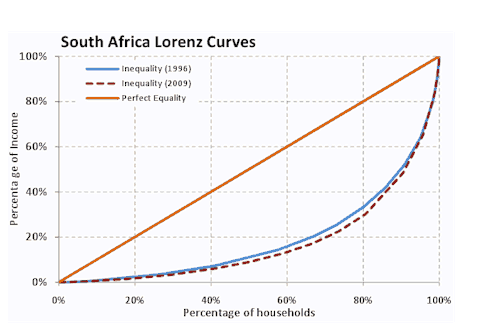
While these issues are central to the tragic, and large-scale, loss of life, there is an overarching theme that I have yet to mention.  18 years after the fall of the apartheid government, South Africa remains a profoundly unequal society.  Income inequality has only increased since the end of apartheid and a majority of South Africans live below the poverty line, out of the line of sight of World Cup visitors and international businesspeople.

South Africa does have a strong and growing economy, but most South Africans remain poor. South Africa's Constitution, established during the transition to democratic government, is quite progressive, and has economic provisions and guarantees similar to those found in the Universal Declaration of Human Rights: rights to housing, property, and access to basic amenities. Yesterday as we brainstormed as an office about the implications of the tragedy in Marikana and how we thought we should respond, I was jotting down thoughts.
  
[To help you make sense of my sketch: I drew a rough outline of South Africa. Money flows out of the country to multinationals and also flows to economic and political elites. Violence and other negative results of the mining operations cascade to poor laborers.] 
Extractive mining operations don't contribute to development in any meaningful way.  Profits largely leave the countries borders and into the offshore accounts of multinational corporations. Also, the level of corruption and cronyism in the South African government suggests that money also flows into the pockets of economic and political elites who allow contracts to be established outside democratic and transparent processes.  While the benefits of mining operations (profits) leave the country and flow to the haves, the have-nots (the miners and their families) are faced with the consequences of the mining operations.  Health complications from years of underground labor, ecological and environmental problems (which tend to disproportionately affect poor communities), and police brutality are forcibly borne by mineworkers and their families as well as the communities living in the proximity of the mine's toxic output.  Expressed differently, the mining operations create a series of outputs; the majority of positive outputs are delivered to economic and political elites while the negative outputs are left in the hands of southern Africa's poorest.  

Update: Their is a good column along these lines -- pointing out the role of inequality and the connections between government and industry -- in the National. 

Monday, July 30, 2012

Where rape, murder, and gross income inequality are classified as "peace"

Over the last week, a common theme has randomly emerged out of lectures I have attended and blog posts I’ve read: scholars and practitioners of conflict (resolution), international affairs, peacebuilding, and transitional justice are fixated on political violence, often at the expense of other, more discreet, but equally as menacing forms of violence.

At a seminar hosted by the Institute for Security Studies in Cape Town, Australian academic, John Braithwaite spoke about “cascades of violence” that tend to move and morph in location and in type.  Violence in the eastern provinces of the Democratic Republic of the Congo seeps across the border to Rwanda.  Policymakers often fail to see the impacts of their political decisions and military movements. One acute example of a violence cascade is the Iraq sectarian war that was fomented (or mobilized) by the US invasion and occupation of that country. Not only did the sectarian divide contribute significantly to the more than 100,000 Iraqis that are now dead as a result of the war, but sectarianism is increasingly problematic throughout the region.  Iran and Saudi Arabia’s feud is starting to resemble US-USSR relations during the Cold War period, albeit on a much smaller scale. Iran funds Shia, and non-Sunni, movements and regimes while Saudi Arabia generally supports Sunnis. 

Not only does political violence cascade from one place to another, but violence can shift and cascade from one type to another.  In South Africa, political violence has decreased in the last 18 years, since the political transition to democracy in 1994.  However, other types of violence in South Africa have remained static or have even increased. Violent crime in South Africa remains quite high.  According to 2010 data, the southern Africa region has the highest rates of intentional homicide in the world, followed closely by Central America.  South Africa, as a country, ranks in the top 10 for intentional homicides per 100,000 people.  As of the early 2000s, South Africa had the highest rape rate per capita in the world.


In addition to high rates of violent crime, South Africa remains one of the most economically unequal societies on the planet.  South Africa has an incredibly high GINI coefficient, a World Bank statistic that measures the level of economic inequality in a given country (however, comparing GINI coefficients between countries is difficult because of the different ways that data is gathered and because the type of numbers that go into the production of a GINI coefficient aren’t uniform from country to country). South Africa also ranks among the top 10 most unequal societies in the world when the average income of the top 10% is compared with the average income of the bottom 10%, the same holds when the top 20% is compared with the bottom 20%.


Many community organizations working in townships and formal/informal settlements in South Africa will also attest to the disparity of quality service delivery in townships as compared with wealthier (and usually whiter) areas.  Crime, income inequality, and high rates of HIV (among many other health and education indicators) attest to acute forms of structural violence in South Africa.  Many donors and scholars have turned their attention away from South Africa, yet continue to refer to it as a prototypical success story, despite the ongoing economic and social maladies that plague the country. 

In his new, highly-touted book The Better Angels of Our Nature: Why Violence has Declined, Steven Pinker suggests that violence has decreased over time.  However, Christian Davenport recently pointed out that Pinker doesn’t look at the full scope of violence.
OK, so maybe the magnitude of violence has been diminished (which Pinker says) but the form may have shifted (which he does not).     
Davenport goes on to suggest that governments aren’t more angelic towards one another, nor to their own citizenry; instead, the forms of violence have simply changed.  States have also become quite effective at silencing voices of dissent and weakening movements that attempt to change the status quo and dethrone the throne-sitters. 

Will H. Moore also gets in on the conversation and suggests that the fixation of violent political conflict fails to account for structural violence and the connection between justice and peace.  Peace is too often (mis)understood as the absence of political violence.  Within this (misunderstood) understanding, peace can be at hand when wealth is disproportionately in the hands of whites while black South Africans don’t have access to electricity or proper toilets and peace can be manifest while women have a better chance of being raped than getting an education.     

Therein lies South Africa: high rates of violent crime, income inequality, and a plethora of social structures and social institutions that prevent the vast majority of South Africans (and a disproportionate number of non-whites) from meeting their basic needs; yet, there is a relative absence of overt political violence.

Has political violence in South Africa cascaded into more severe forms of structural violence? Have social and economic agreements made during the political transition only entrenched the (unequal) economic and social status quo while the political landscape changed without benefit for South Africa’s poor (black) majority?          

Wednesday, July 25, 2012

Threats of demolitions; These are real people

From the NY Times:
The Israeli government has asked its Supreme Court to allow the demolition of eight Palestinian hamlets in the South Hebron Hills so the area can be used for military training.
Amira Hass at Haaretz clarifies the villages that are slated to be demolished:
The villages slated for demolition are the larger villages in the region: Majaz, Tabban, Sfai, Fakheit, Halaweh, Mirkez, Jinba, and Kharuba, which have a total of 1,500 residents. The villages to be spared are Tuba, Mufaqara, Sarura and Megheir al-Abeid, which have a total of 300 residents.

The southernmost villages on this map are the villages that are threatened with demolition.  The army currently operates a firing zone in this southern region of the West Bank. There are signs that warn residents to not cross certain expanses of the territory; however, is appears the Israeli defense minister needs more land to train his troops.

All demolitions and cruel, and enraging, but these newly-requested demolitions are especially painful for me because I know these places and I know the people.  I'll include some information about these villages to hopefully humanize the residents.
  • Fakheit - In April 2009, Fakheit school opened to accomodate students living in Maghayir Al-Abeed, Markaz, Halawe, Fakheit, Majaaz, and Jinba. Previously, children from these villages attended school in Yatta, which required them to live in the city during the school week. Now the teachers at Al-Fakheit school travel from Yatta each day and pick up schoolchildren along the route.  The school has grown significantly in the last several years, from three tents in Fakheit, to numerous cinder block structures in both Fakheit and Jinba. The growth in the number of students suggests that more families with children are able to live permanently at their homes in the south hebron hills because their children can attend primary school there.  
  • Majaz - Many of the kids that attend the Fakheit school are from Majaz. I'd often ride in the pick-up that transports the school kids from their villages to Fakheit school.  All the kids would be waiting outside their houses, donning their blue, UN-provided backpacks, grinning from ear-to-ear and jumping with excitement as the pick-up approached. They absolutely loved going to school.   
  • Halaweh - Halaweh is also the name of a popular Palestinian (maybe Arab) desert.  When I was at the school I'd chat with the kids, asking them their names and where they were from.  When kids answered, "Halaweh," I'd always make a remark about how I loved Halaweh and it was nice to know it was made in their village. That would usually get the kids laughing while they explained to me that Halaweh wasn't made in their village, it just happened to be the same name. I'd play dumb every time and thank them for informing me about the coincidence of names.  
I could write more about Jinba and Kharuba and the other villages that are slated for demolition.  The point is that there are real people living in these villages.  The title of the NY Times article says that the Israeli army is looking to use this "West Bank area," but that's misleading, Israel is looking to use the land on which these Palestinians live, it's seeking to erase Palestinian villages and Palestinian people from the landscape.

This can't be allowed to happen.  

Kids at Fakheit school


Wednesday, July 18, 2012

Notre Dame needs a gay-straight alliance


On May 1, 2012, the application for Notre Dame's unofficial gay-straight alliance, AllianceND, to gain official club status was deferred until the fall 2013 semester. The deferral marked the first time an LGBTQ student club was not outright denied club status. Although the decision came before the last day of classes, support for AllianceND and the LGBTQ community was shown through letters to the student newspaper and over 2,000 undergraduate signatures on a 'Letter of Solidarity.' To continue this momentum into the fall semester and to demonstrate to the Offices of Student Activities and Student Affairs that the need for AllianceND is widespread and deep-seated, the 4 to 5 Movement at the University of Notre Dame invites and encourages supporters of AllianceND to write a short letter detailing why having a GSA at Notre Dame is important.

Here's why the GSA is important to me:
Because all students, of any common identity or interest (as far as it is not harmful to others), should be able to gather in an official capacity on University property.

Because people that are discriminated against -- in this case LGBTQ students, faculty, and staff -- should be able to gather in a safe space to voice their joys, frustrations, hopes, and fears to their friends and allies without fear or reprisal or penalty.

Because not allowing a gay-straight alliance tells the world that Notre Dame is far behind the curve in its acceptance of those who identify as LGBTQ.

Because not allowing a gay-straight alliance is discriminatory.   
Why is it important to you? Tell them.

Wednesday, July 11, 2012

Demolitions and forced evictions; Palestine and South Africa


Pre-demolition District Six
The District Six Museum memorializes a diverse Cape Town neighborhood that was demolished by the apartheid government. District Six, renamed Zonnebloem by the apartheid government, was a diverse neighborhood that housed “a mixed community of freed slaves, merchants, artisans, labourers and immigrants.”      

In 1966, District Six was declared a white area under the Group Areas Act of 1950. By the early 1980’s the neighborhood has been entirely depopulated through forceful removals. More than 60,000 residents were relocated from District Six to the Cape Flats townships, a flat-lying, sandy region that lies southeast of the Cape Town business district. All homes in District Six were demolished.  

   
District Six after demolition  - District Six Museum

A satellite image from Google (captured yesterday) shows the remnant of the razed neighborhood.  The Cape Peninsula University of Technology was controversially built in District Six, however, most of the demolished area remains undeveloped.  

Undeveloped lands mark the demolitions in District Six
The floor of the museum is covered with a map of District Six as it appeared before the forced removals and demolitions.  Former residents of District Six who have visited the museum have marked the locations of their family homes before the demolitions.


As I read the stories of those forcibly displaced and looked at images of bulldozers razing homes, I couldn’t help but think of Palestine. Demolitions have become emblematic of Israeli oppression in Gaza and the West Bank and are a sign of the callousness of the Israeli state in its treatment of Palestinian communities.  

While there is some speculation about the reasons for the demolition of District Six, as the apartheid regime suggested several different reasons for the removals, a piece of the answer lies in District Six’s proximity to the city center, Table Mountain, and the harbor. In other words, in was a valuable piece of land that the government decided should be cleansed and re-inhabited by the preferential people group: whites.  The cosmopolitan nature of District Six also scared the government as the mixing of races would inevitably lead to camaraderie stemming from shared oppression, resulting in alliances that the minority white government could not afford.

The Israeli government also has various ambiguous reasons for carrying out demolitions of Palestinian homes. One category of responses is, “their homes are built illegally,” while the other set is, “it’s for security.” Or more ludicrously, Israel's previous policy of demolishing the homes of suicide bombers (even if an entire family still lived there).

The Israeli state demolishes Palestinian homes to safeguard land for Jewish settlement in addition to demolishing Palestinian homes under the pretense of protecting existing Jewish communities that were built in close proximity to Palestinian areas.  

The South African apartheid government and the Israeli state carried out demolitions for slightly different stated reasons, but the baseline rationale was the same: to distance, invisibilize, and margianalize the racial ‘other.’  The immigrants that settled on South African and Palestinian land took power (through various military, political, and legal maneuvers) and then sought to group the racial other into camps, bantustans, townships, or ghettos while leaving the most desirable and resource-laden lands in the possession of the ruling minority (the Palestinian and Jewish populations are now nearly equal between Israel, Gaza, and the West Bank but this is only a recent development -- after the war of 1948, Jews were a ruling minority population). Unfortunately, Israel carries forward the legacy of demolitions while South Africa has moved beyond de jure racial segregation.  


Sunday, July 08, 2012

Robben Island and national narratives

I’ve now been to a couple of island prisons: Alcatraz and Robben Island.  There are similarities and differences between the two. For starters, the ferry ride to Alacatraz has beautiful views of San Francisco and is quite peaceful.  The boat trip to Robben Island also has amazing views of Cape Town but the ride is significantly longer (around 45 minutes) and travels over rough seas. As a result of the tumultuous seas, I had my head buried in a white paper bag for about 30 minutes, it was…memorable.  Alcatraz is known for Sean Connery and hardened criminals; Robben Island is known for Nelson Mandela and the struggle against apartheid. 


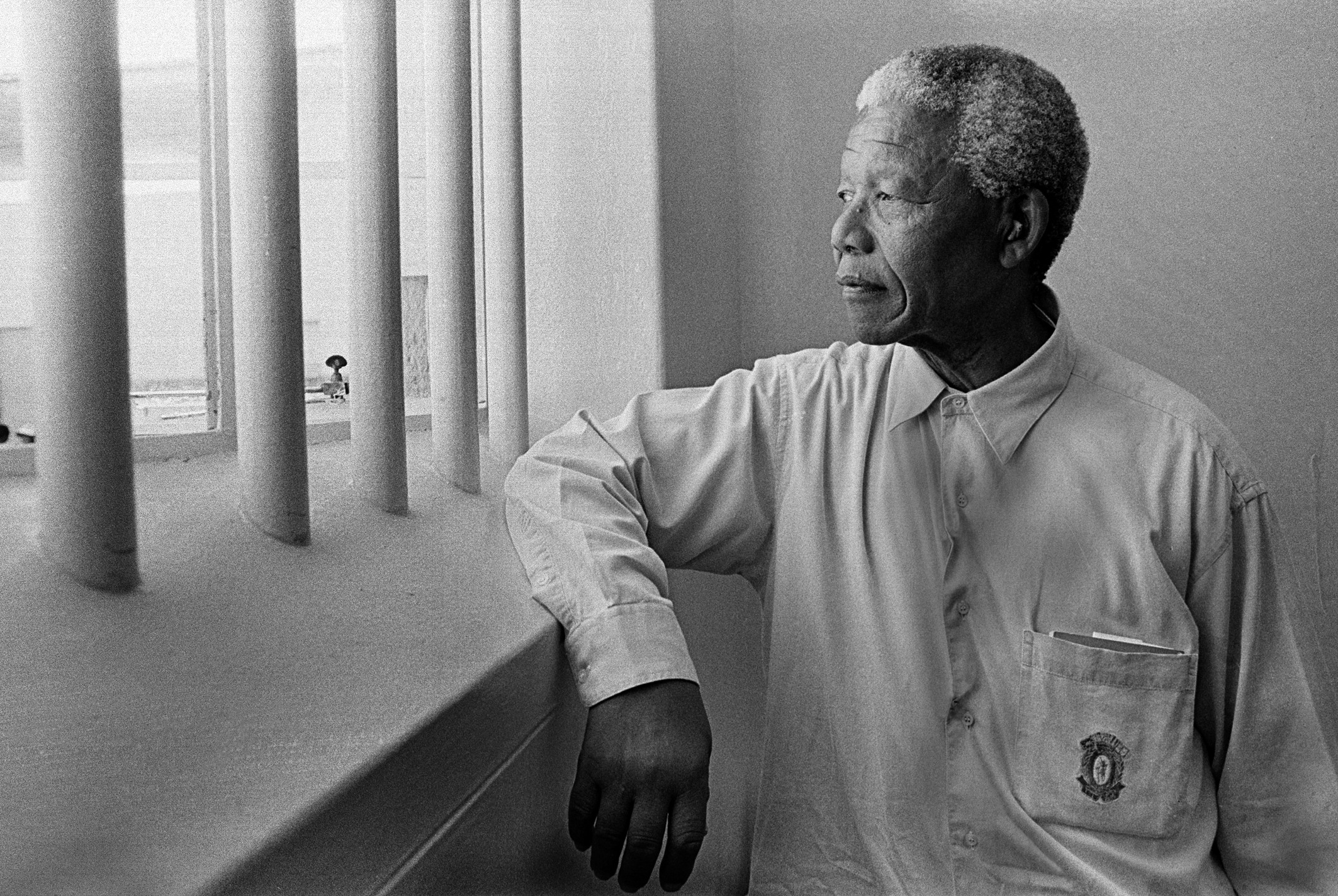
Robben Island is a small piece of land off the coast of Cape Town.  The island weighs in at five square kilometers (or two square miles), but the small size of Robben Island contrasts with the great historical significance that it carries.  Robben Island had been used as a detention center for political prisoners since the 17th century when Dutch settlers were the first to use Robben Island as a prison.  Robben Island’s most famous prisoner was former South African president and Nobel laureate, Nelson Mandela.  Mandela, alongside many other anti-apartheid leaders and freedom fighters, were imprisoned on Robben Island for up to 27 years.  The prominent members of many Coloured, Indian, and African political organizations were imprisoned by the National Party apartheid government.  Other notable prisoners were Robert Sobukwe, head of the Pan African Congress, a South Africa liberation movement; Walter Sisulu, a well-known activist of the African National Congress (ANC); and Jacob Zuma, current South African president and leader of the ANC. 


After taking a short bus tour of the island, we were guided through the once operational maximum security prison by an ex-political prisoner imprisoned on Robben Island.  Ironically, the maximum security prison on the island held all of the political prisoners that had not carried out violent crimes, while the minimum security prison housed all of the hardened criminals that were deemed too dangerous to be housed in mainland prisons.

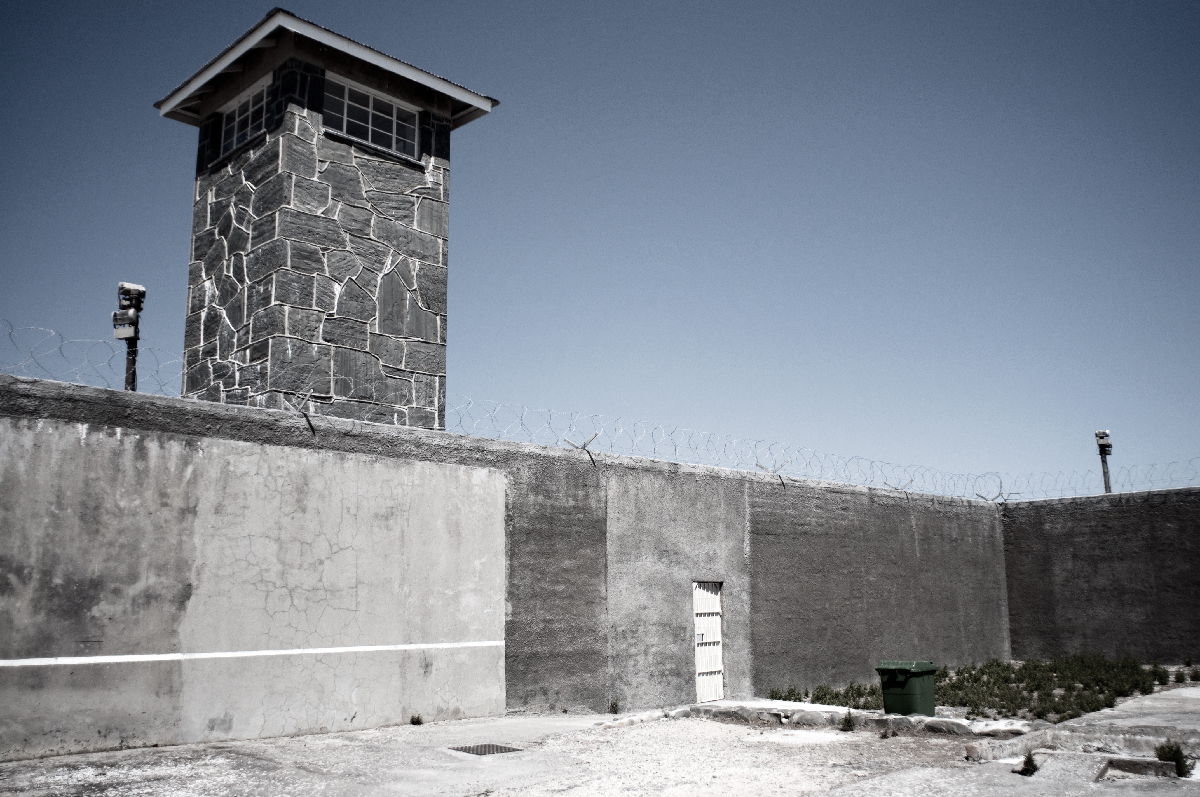
We saw ‘B section’ of the prison which housed the leaders of South African political organizations.  The prison cells were filled with the names of the prisoners housed in each cell, along with stories, and items associated with the stories, told by the prisoners.  We stood in the courtyard, the only outdoor access that many people had for their 27 years of imprisonment.  B-section prisoners constructed a concrete pad that was used as a tennis court.  One of their ways of communicating with A section, where other political prisoners were housed, was through the use of a special tennis ball.  The ball could be opened and stuffed with a message and then ‘mistakenly’ hit over the concrete wall which surrounded the courtyard.  A-section prisoners would then read the message, respond, and return the ball back over the wall.

We saw the quarry where all political prisoners worked 6 days a week; 8 hours per day in the winter and 10 in the summer.  Originally the prison wardens had prisoners work in the quarry to extract limestone to be used on roads and for whitewashing houses on the island.  Eventually there was no use for the limestone but the prisoners continued the backbreaking work in the quarry as the political elites and prison wardens attempted to break the prisoners’ spirits. 

But what amazed me as we looked at the white walls of the quarry and the concrete walls of the courtyard was thinking about the determination and resolve that prisoners hung onto despite decades of imprisonment.  Mandela emerged from prison ready and eager to lead a new democratic South Africa.  I imagine it was a battle some days to not give up the struggle, amidst cruel treatment and torture, blistering days in the quarry, and years disconnected from those organizing for political reform in the outside world.

I was also struck with the courage it must take an ex-political prisoner to give tours of the place he was imprisoned and maltreated.  The man who gave us a tour walked with a cane as he strolled through the cell blocks and eagerly answered our questions.  When asked about the current situation in the country, he was quick to critique the ANC and the educational system for not doing enough to inform young South Africans about the history of their country.  He suggested that foreign students know more about the apartheid era and figures like Mandela than many South African students.  This obviously says nothing about the students themselves but speaks about the constructed national narrative and the place of South African history in the schools.  I imagine it also has something to do with how South Africa deals collectively with race, colonization, and apartheid as part of national history and collective memory.  

And then we took our 'long walk to freedom' from the prison down to the boat harbor, or based on my previous bout of seasickness, it was my long walk to torture.  

Saturday, July 07, 2012

Spokeswoman admits to US State Department's duplicity

The AP's Matt Lee is at it again in this exchange with State Dept spokeperson, Victoria Nuland:


VICTORIA NULAND, spokesperson for State Department:

Listen, before we leave Syria, I just want to take the opportunity, if you didn’t see it, to draw your attention to the Human Rights Watch report that was released today that identifies some 27 detention centers that Human Rights Watch says Syrian Government intelligence agencies have been using since the Assad crackdown on pro-democracy protestors. The report found that tens of thousands of Syrians are in detention by regime security and intelligence agencies and that the regime is carrying out inexplicable, horrific acts of torture, including – well, I’m not going to repeat them here, but I’ll leave it to you to read the report. And in many cases, the Human Rights Watch asserts that even children have been subject to torture by the Assad regime.

MATT LEE: Do you see that report as credible and solid, and you’re putting – you’re endorsing it? I mean, you’re saying –

MS. NULAND: We have no reason to believe that it is not credible. It’s based on eyewitness accounts, and they’re reporting from a broad cross-section of human rights figures inside Syria.

LEE: So the next time Human Rights Watch comes out with a report that’s critical of Israel for its treatment of the Palestinians, I’ll assume that you’re going to be saying the same thing, correct; that you think that the report is credible, it’s based on eyewitness accounts?

MS. NULAND: As –

LEE: And you’re not going to say that it’s politically motivated and should be dismissed?

MS. NULAND: Matt, as you have made clear again and again in this room, we are not always consistent.

Goyal.

LEE: So, in other words, anything that Human Rights Watch says that is critical of someone you don’t like, that’s okay; but once they criticize someone that you do like, then it’s not worth the paper it’s printed on?

MS. NULAND: Matt, I’m not going to get into colloquy on this one.

Goyal.

RAGHUBIR GOYAL (India Globe): India.

MS. NULAND: Yeah.